Keeping Account
2026.10.10 19:21
And as to what became of the three aforementioned marvels:
The Performa 5320CD was inherited by my mother, and served as her main computer and private television for many years.
The iMac DV SE that went up in smoke has since then been reacquired, and is now one of the centerpieces in my small but magnificent Mac museum.
And the iMac Core Duo was inherited by my mother-in-law, and remained her main computer and portal to the internet until it finally checked out for good during the Christmas holiday of 2021.
Screw recycling! In this household we reuse!
The Performa 5320CD was inherited by my mother, and served as her main computer and private television for many years.
The iMac DV SE that went up in smoke has since then been reacquired, and is now one of the centerpieces in my small but magnificent Mac museum.
And the iMac Core Duo was inherited by my mother-in-law, and remained her main computer and portal to the internet until it finally checked out for good during the Christmas holiday of 2021.
Screw recycling! In this household we reuse!
Moving Forwards
2026.10.03 22:53
Right before the summer exam period of 2006 the iMac DV SE sadly drew its last breath. Desperately needing a persistent connection to the internet to proofread my exam notes, I jumped on the first available train ride to Budapest and picked up my next computer: The brilliant iMac Core Duo.
The new iMac made me finally take the gigantic leap from Mac OS 9 to Mac OS X, and its fantastic next generation application suites. It also further expanded my horizon with DVD authoring capabilities, built-in webcam, and a media center complete with remote control.
And during the fall of the same year the iMac gave birth to Pecs-Students.hu, the official web site for the English program students of Pécs Medical School. Mednotes.net started its life as a small corner of Pecs-Students.hu, before finally cutting the umbilical cord 3 years later.
While Pecs-Students.hu is long gone by now, its spirit still lives on twenty years later through Mednotes.net.

The new iMac made me finally take the gigantic leap from Mac OS 9 to Mac OS X, and its fantastic next generation application suites. It also further expanded my horizon with DVD authoring capabilities, built-in webcam, and a media center complete with remote control.
And during the fall of the same year the iMac gave birth to Pecs-Students.hu, the official web site for the English program students of Pécs Medical School. Mednotes.net started its life as a small corner of Pecs-Students.hu, before finally cutting the umbilical cord 3 years later.
While Pecs-Students.hu is long gone by now, its spirit still lives on twenty years later through Mednotes.net.
Lucky Strike
2026.09.11 21:52
Around year's end of 1999 I advanced to a brand new iMac DV SE. This graphite-colored beauty sported a DVD player and broadcast quality video editing capabilities, and kept on fuelling my creativity far into the new millennium.
From the iMac my very first artist portfolio, aptly named 'Creations Ltd.', was published to the web during the late spring of 2000.
The web site couldn't possibly have come at a more opportune moment right smack in the middle of the dot-com boom, and it didn't take long before job offers were piling up. And before I knew it I was running a pretty much complete freelance creative studio from my childhood room.
Several of the entrances in my current artist portfolio here at Mednotes.net stem from this period in my life.
Head over to my websites and give Creations Ltd. a spin!
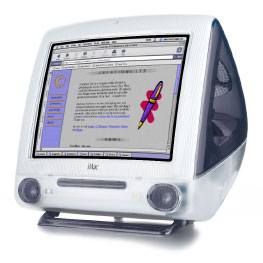
From the iMac my very first artist portfolio, aptly named 'Creations Ltd.', was published to the web during the late spring of 2000.
The web site couldn't possibly have come at a more opportune moment right smack in the middle of the dot-com boom, and it didn't take long before job offers were piling up. And before I knew it I was running a pretty much complete freelance creative studio from my childhood room.
Several of the entrances in my current artist portfolio here at Mednotes.net stem from this period in my life.
Head over to my websites and give Creations Ltd. a spin!
Looking Back
2026.08.20 20:06
Way back in 1996 I purchased my very first computer, a Macintosh Performa 5320CD. It was an all-in-one wonder, providing my childhood room with both a full-fledged creative workstation, gaming rig, hi-fi system, and TV set.
The computer also came with yet another peculiar feature called a 'modem'. I initially used it to access bulletin board systems in the US, with accompanying extortionate long-distance call rates. But I then became aware of something known as the 'world wide web' that recently had become available to the public, and soon thereafter my very first web site went online.
Since then, I've pretty much constantly been designing, coding and maintaining various web sites for both myself and others in parallel with my education and later also my career.
And today I'm officially starting the process of re-publishing many of these long lost sites to the greater internet.
First off are a handful of web sites that might already be familiar to those of you following my ramblings here in the news section, notably Trans-Siberia.net, Celina-Celeste.com, Alexander-Arian.com and Katalin-Brynjar.com.
They are already available in the brand new my websites section, so go check them out!
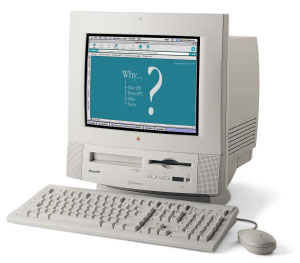
The computer also came with yet another peculiar feature called a 'modem'. I initially used it to access bulletin board systems in the US, with accompanying extortionate long-distance call rates. But I then became aware of something known as the 'world wide web' that recently had become available to the public, and soon thereafter my very first web site went online.
Since then, I've pretty much constantly been designing, coding and maintaining various web sites for both myself and others in parallel with my education and later also my career.
And today I'm officially starting the process of re-publishing many of these long lost sites to the greater internet.
First off are a handful of web sites that might already be familiar to those of you following my ramblings here in the news section, notably Trans-Siberia.net, Celina-Celeste.com, Alexander-Arian.com and Katalin-Brynjar.com.
They are already available in the brand new my websites section, so go check them out!
Orange is the New Black
2026.07.15 00:27
Pressing on, I'm delighted to release version 1.2 of GMU Y2K Skin, adding a tangy fresh orange skin variation.
Its tangerine hue is several notches darker than I initially envisioned, but usability and visibility of the white LCD letters triumphed in the end.
Go grab it on the brand new Linux software page!
New in GMU Y2K Skin 1.2:
- Added brand new 'Y2K Orange' skin variation.
(- And used an abominable amount of time piecing together preview screenshots letter by letter.)
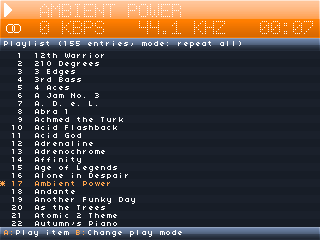
Its tangerine hue is several notches darker than I initially envisioned, but usability and visibility of the white LCD letters triumphed in the end.
Go grab it on the brand new Linux software page!
New in GMU Y2K Skin 1.2:
- Added brand new 'Y2K Orange' skin variation.
(- And used an abominable amount of time piecing together preview screenshots letter by letter.)
Growing Pains
2026.06.26 14:04
As my artist portfolio has kept on expanding in scope over the years, it has slowly begun to outgrow the original structure of this web site. In particular my software has been in dire need of an overhaul as support for new (and old) operating systems have been added. I've also gradually been migrating my other web sites to the server as their domain names have expired, and an organic way to keep them publicly available has been high on my list of priorities for quite some time now.
I therefore am ecstatic to present the first major restructure of Mednotes.net since breaking free from its sister site, Pecs-Students.hu, back in 2009.
Most prominently, the computer programmer entry of my artist portfolio has moved to a brand new my software section with proper subdivisions according to operating system support. However, as the computer programmer entry has been so extensively woven into the fabric of the world wide web, this move required the very first URL redirect of this web site. The latter makes me particularly proud, as it infers that Mednotes.net now officially has become part of the backbone of the greater internet.
I've also laid the groundwork for a brand new 'my websites' section to ensure my long lost sites will remain available online for all foreseeable future. I'll announce the expansion here in the news section once it goes live, so keep your eyes peeled!
Finally, I've performed some major spring cleaning, removing old, unused and redundant pages, as well as properly restructuring the entire web site as a whole for a more logical progression.
In the end, I couldn't have imagined a more suitable way to mark Mednotes.net's 20th anniversary.
Here's to the next 20 years!
I therefore am ecstatic to present the first major restructure of Mednotes.net since breaking free from its sister site, Pecs-Students.hu, back in 2009.
Most prominently, the computer programmer entry of my artist portfolio has moved to a brand new my software section with proper subdivisions according to operating system support. However, as the computer programmer entry has been so extensively woven into the fabric of the world wide web, this move required the very first URL redirect of this web site. The latter makes me particularly proud, as it infers that Mednotes.net now officially has become part of the backbone of the greater internet.
I've also laid the groundwork for a brand new 'my websites' section to ensure my long lost sites will remain available online for all foreseeable future. I'll announce the expansion here in the news section once it goes live, so keep your eyes peeled!
Finally, I've performed some major spring cleaning, removing old, unused and redundant pages, as well as properly restructuring the entire web site as a whole for a more logical progression.
In the end, I couldn't have imagined a more suitable way to mark Mednotes.net's 20th anniversary.
Here's to the next 20 years!
Final Stand
2026.06.07 10:35
And as yet another exclusive treat to all of you following my severe logorrhoea here on these pages, I'm publishing the 'AI Free' rubber stamp badge as a fully editable Photoshop PSD completely free of charge right here in the news section.
Like everything else at this web site, it is published under a 'Creative Commons Attribution Non-Commercial License' - so go nuts!
Get it here!

Like everything else at this web site, it is published under a 'Creative Commons Attribution Non-Commercial License' - so go nuts!
Get it here!
Full Stop
2026.06.06 15:43
Ever since generative AI has become a widely available household commodity almost overnight, I've been sitting quietly on the sidelines observing its consequences on human nature, health, cognition, knowledge and artistry.
Artificial intelligence has some tremendous strengths, including analyzing inhumanely massive information loads, executing and/or reviewing highly repetitive tasks, and aiding those less fortunate to better understand the world around them. Sadly, these scenarios so far seem vastly underrepresented.
Mostly, from what I gather, AI is being used out of convenience and/or blatant laziness, and serves as nothing more than a believable source of potential misinformation with degrading effects on both mental capacity and creativity, and with an empirically proven link to deteriorating mental health and loneliness. Even more concerning is that it seems to impede our capacity for source criticism even more than most traditional search engines already are guilty of, and is yet another Trojan horse to skew our perception of reality even further away from the objective truth.
It also seemingly is causing a rapid putrefaction of the internet as we know it with an endless stream soulless semi-uniform texts, images and videos which blurs the line between reality and fiction in an almost sinister way. And, more than anything, it seems to hamper our willingness to put down the hours required to become genuinely good at something, and simultaneously dilutes the value of those who still do.
As such, I have finally solidified my stance on artificial intelligence, and Mednotes.net will forever remain a 100% AI-free safe haven away from the sad gradual decay of the internet as a whole!
Stay vigilant!
Artificial intelligence has some tremendous strengths, including analyzing inhumanely massive information loads, executing and/or reviewing highly repetitive tasks, and aiding those less fortunate to better understand the world around them. Sadly, these scenarios so far seem vastly underrepresented.
Mostly, from what I gather, AI is being used out of convenience and/or blatant laziness, and serves as nothing more than a believable source of potential misinformation with degrading effects on both mental capacity and creativity, and with an empirically proven link to deteriorating mental health and loneliness. Even more concerning is that it seems to impede our capacity for source criticism even more than most traditional search engines already are guilty of, and is yet another Trojan horse to skew our perception of reality even further away from the objective truth.
It also seemingly is causing a rapid putrefaction of the internet as we know it with an endless stream soulless semi-uniform texts, images and videos which blurs the line between reality and fiction in an almost sinister way. And, more than anything, it seems to hamper our willingness to put down the hours required to become genuinely good at something, and simultaneously dilutes the value of those who still do.
As such, I have finally solidified my stance on artificial intelligence, and Mednotes.net will forever remain a 100% AI-free safe haven away from the sad gradual decay of the internet as a whole!
Stay vigilant!
Retrofuturistic
2026.05.29 18:57
Starting off the fresh batch of releases is GMU Y2K Skin, a brand new customization for Johannes Heimansberg's awesome GMU music player for GMenu2X-compatible game consoles.
The skin is heavily inspired by the Y2K aesthetic from around the turn of the millennium, and draws influence from digital music players of that era - including the high gloss finish of Panic's awesome Audion, and the pinstripe pattern of Apple's own iTunes.
The horizontal layout of GMU lends itself perfectly to polished shiny surfaces, and the segmentation of the default theme was simply begging for a Y2K-redesign. Actually, I'm quite dumbfounded that this exact theme hasn't already been made ages ago!
Head over to the computer programmer section of my artist portfolio to grab your very own free copy!
Version History:
Version 1.1:
- Added iTunes-like stripes to the background.
- Added a slight purple tint to dividers and background.
Version 1.0:
- Reworked colors, gradients, gloss, and transparencies.
- Renamed skin to 'GMU Y2K Skin'.
Version 0.9:
- Initial release.
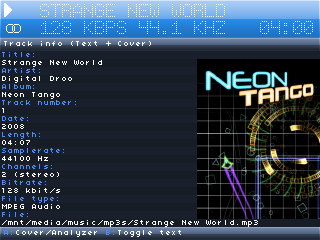
The skin is heavily inspired by the Y2K aesthetic from around the turn of the millennium, and draws influence from digital music players of that era - including the high gloss finish of Panic's awesome Audion, and the pinstripe pattern of Apple's own iTunes.
The horizontal layout of GMU lends itself perfectly to polished shiny surfaces, and the segmentation of the default theme was simply begging for a Y2K-redesign. Actually, I'm quite dumbfounded that this exact theme hasn't already been made ages ago!
Head over to the computer programmer section of my artist portfolio to grab your very own free copy!
Version History:
Version 1.1:
- Added iTunes-like stripes to the background.
- Added a slight purple tint to dividers and background.
Version 1.0:
- Reworked colors, gradients, gloss, and transparencies.
- Renamed skin to 'GMU Y2K Skin'.
Version 0.9:
- Initial release.
Future-Proof
2026.04.21 21:32
And while at it, I've also upgraded both Celina-Celeste.com, Alexander-Arian.com, and Katalin-Brynjar.com to HTTPS.
Now we're cooking!
Now we're cooking!
Pleasant Surprise
2026.04.16 22:01
As a completely unintended consequence of upgrading this web site to HTTPS, the picture viewer and slide presenter scripts suddenly have started working properly on mobile devices again.
Perhaps all these hours weren't a complete and utter waste of life after all...
Perhaps all these hours weren't a complete and utter waste of life after all...
Shields Up
2026.04.16 21:29
While I appreciate the added layer of security that HTTPS provides on a personal level, I truly deeply despise it as a web designer.
Most newer web browsers either mark web sites not upgraded to HTTPS as 'not secure', or, in worst case, outright blocks visitors from reaching the web sites at all.
It requires a lot of tiresome manual labor changing the address of every single link, every single picture, and every single script on every single page of a web site to HTTPS, and even a single missed address will cause most modern web browsers to keep on marking the web site as 'not secure'.
It partially or completely breaks compatibility with several older systems and web browsers that many visitors are required or forced to use, and prevents anyone but the most tech savvy from reaching the web sites on these devices.
Most of the security certificates required to upgrade a web site to HTTPS need to be renewed every couple of months, requiring the web site administrator to either always be on his toes, installing complex and intrusive self-renewing scripts, or pay extortionate amounts of money to certificate providers to automatically renew these perpetually expiring certificates.
And, worst of all, it creates a third failure point, in addition to the domain name and server space, that can make any legacy web site permanently inaccessible forever.
As such, I've put off upgrading all my web sites to HTTPS for years and years, but now see no other option than to buckle under pressure to ensure that my web sites remain available on the modern internet.
First out, of course, is Mednotes.net, with my other web sites following suit in the not too distant future.
Here goes nothing!
Most newer web browsers either mark web sites not upgraded to HTTPS as 'not secure', or, in worst case, outright blocks visitors from reaching the web sites at all.
It requires a lot of tiresome manual labor changing the address of every single link, every single picture, and every single script on every single page of a web site to HTTPS, and even a single missed address will cause most modern web browsers to keep on marking the web site as 'not secure'.
It partially or completely breaks compatibility with several older systems and web browsers that many visitors are required or forced to use, and prevents anyone but the most tech savvy from reaching the web sites on these devices.
Most of the security certificates required to upgrade a web site to HTTPS need to be renewed every couple of months, requiring the web site administrator to either always be on his toes, installing complex and intrusive self-renewing scripts, or pay extortionate amounts of money to certificate providers to automatically renew these perpetually expiring certificates.
And, worst of all, it creates a third failure point, in addition to the domain name and server space, that can make any legacy web site permanently inaccessible forever.
As such, I've put off upgrading all my web sites to HTTPS for years and years, but now see no other option than to buckle under pressure to ensure that my web sites remain available on the modern internet.
First out, of course, is Mednotes.net, with my other web sites following suit in the not too distant future.
Here goes nothing!
Full Circle
2026.02.25 23:16
In my experience, life has had a peculiar tendency to come full circle in the strangest of ways.
During my years at medical school, I, from time to time, spent the short breaks between study sessions sifting through old, abandoned, and forgotten video games of the past. Though I never really was an avid gamer myself, I came to appreciate games first and foremost as an art form. Slowly chopping away at it a couple of games at a time, 100.000 games slowly were whittled down to 1.000 of the most passionately crafted pieces of entertainment history ever created. I briefly flirted with the thought of a GP2X open source game console to make good use of the collection during my final year of studies, but quickly put the idea aside.
...and for the longest time thereon out, the compilation was left in the darkest corner of my hard drive collecting dust...
Come the pandemic, I was in dire need of a project to keep me sane during the long ferry rides to and from the hospital on the mainland every day. And purely by coincidence, the BittBoy PocketGo handheld, a literal spiritual successor of the GP2X, caught my peripheral vision.
Since then, I've gradually pushed the limits of what this small but mighty portable device can do, and it has slowly evolved into a fully fledged historical gaming archive, media center, and creative studio all-in-one.
In the coming months, I'll be releasing a handful of brand new software compatible with the original GP2X, the PocketGo, and every other open source game console in between supporting the GMenu2X operating system.
Let's go!

During my years at medical school, I, from time to time, spent the short breaks between study sessions sifting through old, abandoned, and forgotten video games of the past. Though I never really was an avid gamer myself, I came to appreciate games first and foremost as an art form. Slowly chopping away at it a couple of games at a time, 100.000 games slowly were whittled down to 1.000 of the most passionately crafted pieces of entertainment history ever created. I briefly flirted with the thought of a GP2X open source game console to make good use of the collection during my final year of studies, but quickly put the idea aside.
...and for the longest time thereon out, the compilation was left in the darkest corner of my hard drive collecting dust...
Come the pandemic, I was in dire need of a project to keep me sane during the long ferry rides to and from the hospital on the mainland every day. And purely by coincidence, the BittBoy PocketGo handheld, a literal spiritual successor of the GP2X, caught my peripheral vision.
Since then, I've gradually pushed the limits of what this small but mighty portable device can do, and it has slowly evolved into a fully fledged historical gaming archive, media center, and creative studio all-in-one.
In the coming months, I'll be releasing a handful of brand new software compatible with the original GP2X, the PocketGo, and every other open source game console in between supporting the GMenu2X operating system.
Let's go!
Nothing But Lies
2026.01.06 15:48
When this web site first saw the light of day during the fall of 2006, it came quite natural to me having the copyright text at the bottom of every page mirror that of my lecture notes. However, this also created a factual fallacy, making it seem that the web site itself was several years older than actual was the case.
As hoc anno 2026 marks the true 20th anniversary of Mednotes.net in its present form, I've finally gotten around to correcting this wrong.
As hoc anno 2026 marks the true 20th anniversary of Mednotes.net in its present form, I've finally gotten around to correcting this wrong.